



Phone:
+86-18758204915

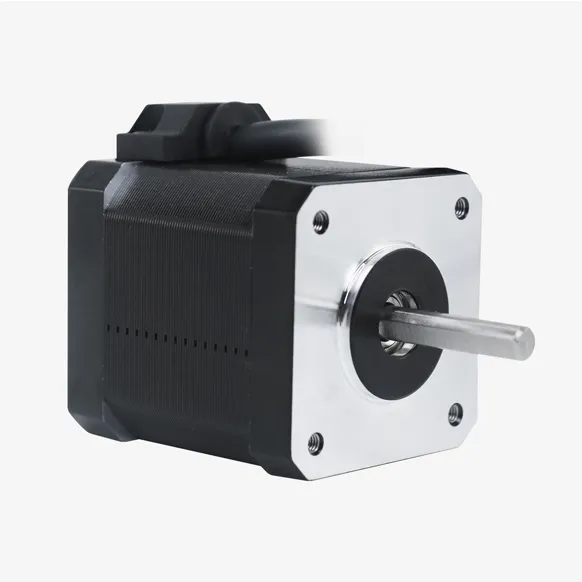
Selecting the right AC motor in 2026 is no longer just about power and mounting dimensions — it is about compliance, operating cost, and long-term availability. As efficiency regulations tighten across major markets, more buyers are comparing IE4 and IE5 classes to reduce electricity spend and avoid costly retrofits. For OEMs and plant upgrades with special voltages, duty cycles, or harsh environments, custom AC motors are often the fastest way to meet efficiency targets while still matching exact application requirements.
The IE efficiency classification exists for one reason: to quantify how much electrical energy a motor wastes as heat. Higher IE class means lower losses — and in a motor running thousands of hours per year, those losses translate directly into electricity bills and equipment life.
IE Class Quick Reference
| Efficiency Class | Label | Typical Loss Reduction vs IE1 | Where Mandated (2026) |
|---|---|---|---|
| IE1 | Standard | Baseline | Being phased out in EU, UK, CN, AU |
| IE2 | High | 15–20% lower losses | Minimum in many markets for general use |
| IE3 | Premium | 25–30% lower losses | Now baseline minimum in EU for motors above 0.75 kW |
| IE4 | Super Premium | 35–40% lower losses | Required for some VFD applications in EU from 2023 |
| IE5 | Ultra Premium | 45–50% lower losses | Emerging requirement; future-proof specification |
Where the Savings Show Up Most
The efficiency advantage of IE4 and IE5 is most significant in applications with high annual run hours and continuous duty — fans, pumps, compressors, conveyors, and air handling units running 16–24 hours per day.
Example: a 15 kW motor running 6,000 hours per year at USD 0.12/kWh:
IE3 to IE4 upgrade: approximately USD 400–600 annual energy saving
IE3 to IE5 upgrade: approximately USD 700–1,000 annual energy saving
Lower losses also mean lower operating temperatures — extending bearing and insulation life, particularly in motors without active cooling or in warm ambient environments.
A standard IE4 or IE5 catalog motor solves most applications. But standard motors fail on compliance or fit more often than buyers expect.
When Custom AC Motors Become Necessary
| Situation | Why Standard Fails | Custom Solution |
|---|---|---|
| Non-standard voltage (e.g., 380V 60Hz, 575V) | Standard winding not optimized for voltage and frequency combination | Rewound for exact supply specification |
| High ambient temperature above 40°C | Standard motor derated; loses IE class compliance at actual operating temp | Specified and thermally designed for actual environment |
| Altitude above 1,000 m | Air cooling reduced; standard motor overheats or requires derating | Cooling design adjusted for altitude |
| Inverter duty with long cable runs | Standard insulation may not withstand VFD voltage spikes | Inverter-duty insulation class specified |
| Special shaft, flange, or mounting | Standard IEC or NEMA frame does not match machine interface | Custom shaft diameter, length, keyway, or flange pattern |
| Brake, encoder, or forced cooling required | Add-ons not available in standard catalog at required efficiency class | Factory-integrated at IE4 or IE5 efficiency |
What to Specify When Requesting Custom AC Motors
Rated power in kW or HP and synchronous speed by pole count
Supply voltage and frequency including tolerance range
Duty cycle: S1 continuous, S3 intermittent, or specific on/off profile
Load torque curve: constant, variable, or shock load
Enclosure: IP55, IP65, IP66, or IP67 depending on environment
Insulation class: F for standard, H for hot environments or VFD duty
Cooling method: TEFC, forced ventilation, or water-cooled
Add-ons required: brake type, encoder resolution, bearing isolators, terminal box position
Energy efficiency regulations are not static. The EU has already moved through IE2, IE3, and IE4 mandates and is tracking toward IE5 for variable-speed applications. Buying to today's minimum risks a non-compliance finding at the next audit or an early retrofit cycle.
How to Write a Policy-Proof Specification
| Spec Element | What to Include | Why It Matters |
|---|---|---|
| Required IE class today | Specify minimum IE class for current procurement | Ensures compliance at point of purchase |
| Upgrade path for future | Note whether IE5-ready design is preferred | Avoids early replacement when regulations step up |
| Nameplate data requirements | Full IE class marking, efficiency value at rated load | Needed for audit documentation and energy reporting |
| Test report requirement | Efficiency at 100, 75, and 50% load; temperature rise | Confirms nameplate claims; required for some certifications |
| Frame and mounting standard | IEC frame size or NEMA equivalent | Enables cross-supplier swap without machine redesign |
| Approved alternates | Two or three qualified suppliers per motor family | Reduces lead time risk and supply chain dependency |
Regional Compliance Overview
| Region | Current Minimum | Trend Direction |
|---|---|---|
| European Union | IE3 above 0.75 kW; IE4 for some VFD applications | IE5 likely for variable-speed applications |
| United Kingdom | Aligned with EU for now | Following EU trajectory |
| China | GB 18613 IE3 equivalent for most sizes | Tightening toward IE4 for key applications |
| USA and Canada | NEMA Premium, roughly IE3 | DOE standards evolving |
| Australia | GEMS IE3 equivalent for most ratings | Regulatory review ongoing |
The decision between a standard catalog motor and a custom AC motor is a total cost of ownership question — not a purchase price comparison.
TCO Factor Comparison
| TCO Factor | Standard IE4/IE5 | Custom AC Motor |
|---|---|---|
| Purchase price | Lower upfront | Higher upfront, typically 10–40% depending on complexity |
| Energy efficiency | Rated at standard conditions | Optimized for actual operating point and environment |
| Derating losses | May apply in hot or high-altitude sites | Designed out — rated for actual conditions |
| Failure risk | Low if correctly applied | Lower if custom-designed for actual duty cycle |
| Lead time | From stock or short lead | Typically 3–8 weeks |
| Spare strategy | Standard frame allows easy cross-supply | Requires planned spare or consigned stock |
| Retrofit risk | May not meet next regulation step | Specified to anticipated future efficiency class |
IE4 vs IE5: When Is IE5 Justified?
| Scenario | Recommendation |
|---|---|
| Motor runs more than 6,000 hours per year at electricity cost above USD 0.10/kWh | IE5 payback typically within 2–3 years |
| Motor runs fewer than 2,000 hours per year | IE4 is usually the economic sweet spot |
| Application will face tighter regulations within 5 years | IE5 future-proofs the investment |
| Budget-constrained with many motors to upgrade | IE4 across fleet; prioritize IE5 for highest run-hour units |
| VFD-controlled variable speed application | IE4 or IE5 with confirmed inverter-duty specification |
The payback calculation is straightforward: IE5 price premium divided by annual energy saving in USD equals payback period in years. On high-run-hour applications, IE5 frequently pays back within two to three years.
Whether specifying for a new OEM machine build or a plant upgrade, this checklist covers the parameters needed to select and procure correctly the first time.
Technical Specification Checklist
| Parameter | What to Define |
|---|---|
| Power rating | kW or HP at the actual operating point |
| Pole count and speed | 2-pole 3000/3600 RPM, 4-pole 1500/1800, 6-pole 1000/1200 |
| Voltage and frequency | Exact supply specification including tolerance |
| IE efficiency class | Minimum required for compliance in target market |
| Duty cycle | S1, S2, S3 and starts per hour |
| Starting method | DOL, soft starter, or VFD — affects insulation and bearing spec |
| Enclosure and IP rating | IP55 standard; IP65/66 for washdown; IP67 for submersible |
| Insulation class | Class F minimum; Class H for high ambient or VFD duty |
| Ambient temperature | Actual installation temperature — not default 40°C assumption |
| Altitude | Above 1,000 m requires derating confirmation |
| Bearing specification | Standard, heavy-duty, or insulated for VFD shaft current risk |
| Lubrication interval | Sealed-for-life vs regreasing — match to maintenance schedule |
| Noise and vibration limit | dB(A) level and vibration grade per IEC 60034-14 |
| Certifications required | CE, UL, ATEX, CCC, EAC — confirm for target market |
Acceptance Testing Requirements
| Test | When to Require |
|---|---|
| No-load current and losses | All motors for efficiency verification |
| Temperature rise test | Custom motors and critical applications |
| Vibration measurement | Precision or high-speed applications |
| Insulation resistance test | Before commissioning on all motors |
| Efficiency at 100, 75, and 50% load | When IE class documentation is required for audit |
In 2026, choosing an AC motor is a compliance and cost decision that affects your facility for years. By aligning IE4 or IE5 selection with actual run hours, electricity cost, and the regulatory direction of your target market — and specifying custom AC motors when site conditions demand it — you reduce energy spend, avoid future retrofit surprises, and build a motor fleet that ages well.
Q1: What is the difference between IE4 and IE5 AC motors?
IE5 motors have lower electrical losses than IE4, delivering higher efficiency — typically 45–50% lower losses compared to the IE1 baseline, versus 35–40% for IE4. The practical difference is most visible in high-run-hour applications where the additional energy saving justifies the higher purchase price. For motors running fewer hours, IE4 is often the economic sweet spot.
Q2: When should I choose IE5 instead of IE4?
IE5 is typically justified when the motor runs more than 6,000 hours per year, electricity costs are above USD 0.10/kWh, or the application will face tighter efficiency regulations within the next five years. The payback period for the IE5 price premium is usually two to three years under these conditions.
Q3: Are custom AC motors more expensive than standard motors?
The purchase price is higher — typically 10–40% depending on complexity. But custom motors designed for actual operating conditions avoid the derating losses and premature failures that drive up total cost of ownership when standard motors operate outside their design envelope.
Q4: Do IE4 and IE5 motors work with VFDs?
Many do, but you must confirm inverter-duty insulation class for VFD voltage spike resistance, a bearing protection strategy to address shaft currents common with VFD operation above 30 kW, and cooling performance at reduced speed — since TEFC motors rely on shaft-driven fans that lose effectiveness at low RPM.
Q5: What information does a supplier need to quote a custom AC motor correctly?
Rated power and speed, exact supply voltage and frequency, duty cycle and starting method, load torque profile, enclosure and IP rating, ambient temperature and altitude, insulation class, any add-ons such as brake or encoder, required certifications for the target market, and acceptance test requirements.