Phone:
+86-18758204915

A worm screw jack is increasingly replacing hydraulic cylinders in modern automation — delivering precise positioning, cleaner operation, and easier control integration without pumps, hoses, or oil leaks. In 2026, OEMs are pairing electric motors and drive solutions, including a stepless speed variator for adjustable speed and torque, to build linear motion systems that are simpler to maintain and easier to standardize across machine platforms.
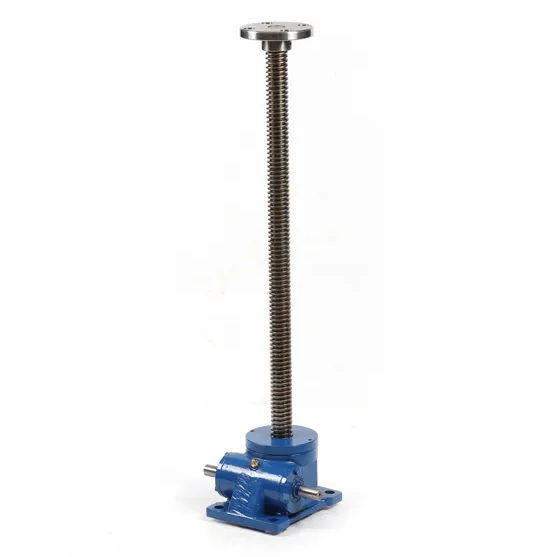
The shift from hydraulic to electric linear motion is accelerating — and it is being driven by total cost, not just purchase price.
Head-to-Head Comparison
| Factor | Worm Screw Jack (Electric) | Hydraulic Cylinder |
|---|---|---|
| Positioning precision | High — mechanically defined by screw travel | Moderate — pressure and seal condition dependent |
| Cleanliness | No oil; suitable for food, pharma, cleanrooms | Oil leak risk; seal wear creates contamination |
| Energy use | Consumes power only when moving | Pump runs continuously in many systems |
| Maintenance | Lubrication and periodic inspection | Seals, hoses, filters, fluid condition, pump |
| Failure mode | Gradual wear; predictable | Sudden hose burst or seal failure possible |
| Control integration | Direct motor and encoder integration | Requires proportional valves; more complex |
| Installation | Compact; no reservoir or pipework | Requires pump unit, tank, and plumbing |
Where Hydraulics Still Makes Sense
Hydraulics retain a real advantage in applications with extremely high force requirements, heavy shock loading, or facilities that already have mature hydraulic infrastructure and maintenance teams. For everything else — particularly precision positioning in automated machinery — the worm screw jack is increasingly the more practical choice.
Understanding the core performance characteristics prevents the most common sizing mistakes.
Key Performance Factors
| Characteristic | What It Means | Design Implication |
|---|---|---|
| Self-locking | Worm geometry prevents backdriving under load at rest | Confirms load holding without brake in many configurations — verify with supplier |
| Static vs dynamic load | Static = holding load; dynamic = load during travel | Size for dynamic load; add safety factor for static |
| Duty cycle | Ratio of operating time to rest time | Continuous duty requires thermal derating vs intermittent use |
| Positioning repeatability | Accuracy of return-to-position with motor feedback | Improves with encoder; mechanical play is the limiting factor |
| Buckling load | Long stroke under compressive load requires buckling check | Column length and guide arrangement critical above ~500 mm stroke |
| Side load limit | Worm screw jacks are not designed for lateral force | Separate linear guide or anti-rotation required where side loads exist |
Sizing Checklist Before Ordering
Maximum static load at full extension
Maximum dynamic load during travel
Required stroke length and duty cycle
Environmental conditions (temperature, dust, moisture)
Input speed and required lifting speed
Required safety factor (typically 1.5–2.5 depending on application)
Speed control is where many worm screw jack systems go from functional to genuinely well-engineered. A stepless speed variator adds continuous mechanical speed adjustment between motor and jack — without electronics, inverters, or programming.
What a Stepless Speed Variator Adds
| Benefit | How It Works | Application Value |
|---|---|---|
| Soft start and stop | Gradual speed ramp reduces shock to structure and load | Protects fragile loads; reduces mechanical stress on jack |
| Speed tuning without motor change | Adjust output speed ratio mechanically | Match lifting speed to process without re-specifying the motor |
| Torque optimization | Speed reduction increases available torque | Handles variable loads across the stroke range |
| Cycle time matching in multi-jack systems | Tune each jack's speed independently | Synchronizes platforms without complex electronic controls |
Typical Drive Architecture
Motor → Stepless Speed Variator → Worm Screw Jack → Limit Switches → Load
This arrangement is common in packaging machinery, industrial platforms, gates, and process equipment where the load profile varies and a simple, robust drive solution is preferred over a full servo system.
Single-jack systems are straightforward. Multi-point lifting — platforms, large gates, industrial positioning frames — requires careful attention to synchronization and safety.
Synchronization Methods
| Method | How It Works | Best For |
|---|---|---|
| Mechanical shafting | Multiple jacks driven from one motor via driveshaft | Simple, inherently synchronized; suits compact aligned layouts |
| Electronic synchronization | Each jack driven by independent motor with position feedback | Flexible layout; suits large or irregular platform geometries |
| Hybrid | Primary shaft drive with speed variator tuning per jack | Mid-complexity systems with moderate layout flexibility |
Safety Checklist
| Safety Item | Purpose |
|---|---|
| Limit switches (upper and lower) | Prevent over-travel at both ends of stroke |
| Overload protection | Motor thermal protection or torque sensing to detect jam |
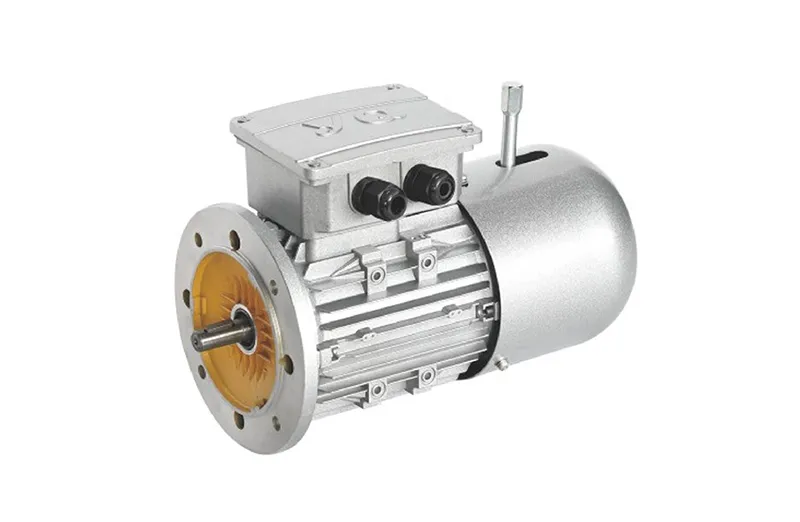
| Brake motor | Holds load if power is lost — required when self-locking is insufficient |
| Anti-rotation guide | Prevents screw rotation; protects from side load |
| Lubrication plan | Grease type, interval, and access point defined at commissioning |
| Emergency stop | Integrated into control circuit with manual reset |
Common Applications
Industrial lift tables and scissor lifts
Sluice gates and water control structures
Solar tracker and antenna positioning
Packaging and filling machine height adjustment
Press platens and mold clamping
Selecting the speed and position control method is one of the most consequential decisions in electric linear motion system design. Each option has a different cost, complexity, and capability profile.
Control Method Comparison
| Control Method | Speed Range | Position Accuracy | Complexity | Maintenance Skill | Typical Cost |
|---|---|---|---|---|---|
| Stepless speed variator | Narrow to moderate (e.g., 1:6 ratio) | Low to moderate — set mechanically | Low — no programming | Low — mechanical adjustment | Lowest |
| VFD (variable frequency drive) | Wide (typically 1:50 or more) | Moderate — with encoder feedback | Medium — requires parameter setup | Medium — electronic faults | Medium |
| Servo system | Very wide with dynamic profiling | High to very high | High — requires commissioning | High — specialist knowledge | Highest |
When to Choose Each
A stepless speed variator is the practical choice when the application needs adjustable speed within a defined range, the environment is harsh or dusty, maintenance personnel have mechanical rather than electronic skills, and simplicity and reliability matter more than precision or remote control. Typical examples include manual or semi-automatic industrial platforms, gate drives, and process equipment with stable, repetitive cycles.
A VFD makes more sense when the speed range needs to be wide, remote or automated speed control is required, energy optimization is a priority, or the motor needs to run at very low speeds for extended periods. VFDs are now standard in most automated factory environments where electricians are available for commissioning and fault diagnosis.
A servo system is justified when the application demands high positioning accuracy, fast and dynamic motion profiles, or tight synchronization between multiple axes. Typical examples include CNC machinery, robotic positioning stages, and multi-axis synchronized lifting with sub-millimeter tolerance requirements. The cost and commissioning complexity are significantly higher, and the maintenance skill requirement is the most demanding of the three options.
Procurement Decision Checklist
| Question | Points Toward |
|---|---|
| Is positioning accuracy critical (sub-mm)? | Servo |
| Is speed range wide (more than 1:10)? | VFD or Servo |
| Is the environment dirty, wet, or high-vibration? | Stepless variator |
| Does maintenance staff have electronic skills? | VFD or Servo acceptable |
| Is lowest total system cost the priority? | Stepless variator |
| Is remote speed adjustment or automation required? | VFD or Servo |
| Is cycle profile fixed and repetitive? | Stepless variator or VFD |
For most standard worm screw jack applications — industrial platforms, gates, packaging equipment, and process machinery — a stepless speed variator paired with a correctly sized motor and jack delivers the best balance of performance, reliability, and total cost of ownership.
In 2026, manufacturers are choosing electric linear motion for precision, cleanliness, and operational simplicity — fewer failure points, no hydraulic consumables, and direct integration with automation controls. A properly sized worm screw jack, combined with the right drive solution — including a stepless speed variator where adjustable speed and torque matter — delivers reliable lifting and positioning performance while eliminating the maintenance burden of hydraulic systems.
Q1: What is a worm screw jack used for?
It converts rotary motor input into controlled linear motion for lifting, lowering, pushing, or positioning loads in industrial equipment — platforms, gates, presses, conveyors, and synchronized multi-point lifting systems.
Q2: Are worm screw jacks more precise than hydraulic cylinders?
Generally yes, especially when paired with motor control and position feedback. Motion is mechanically defined by screw travel, making it inherently more repeatable than pressure-dependent hydraulic positioning.
Q3: Can a worm screw jack hold a load without power?
Many designs are self-locking by nature of the worm gear geometry, but this depends on screw lead angle, efficiency rating, load conditions, and wear state. Always confirm load-holding requirements with the supplier during sizing — and add a brake motor where positive holding is safety-critical.
Q4: What does a stepless speed variator do in a lifting system?
It provides continuous mechanical speed adjustment between the motor and the jack, allowing the operator to tune lifting speed and available torque without changing motors, adding electronics, or reprogramming a controller — making it particularly useful in rugged or simple-automation environments.
Q5: When should I still choose hydraulics over electric screw jacks?
Hydraulics remain the better choice for extremely high force applications, heavy shock loading, or facilities where existing hydraulic infrastructure and maintenance expertise are already in place and the cost of transition to electric is not justified.